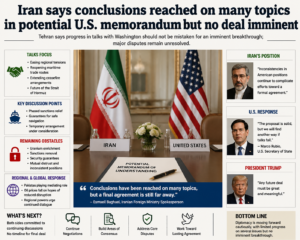


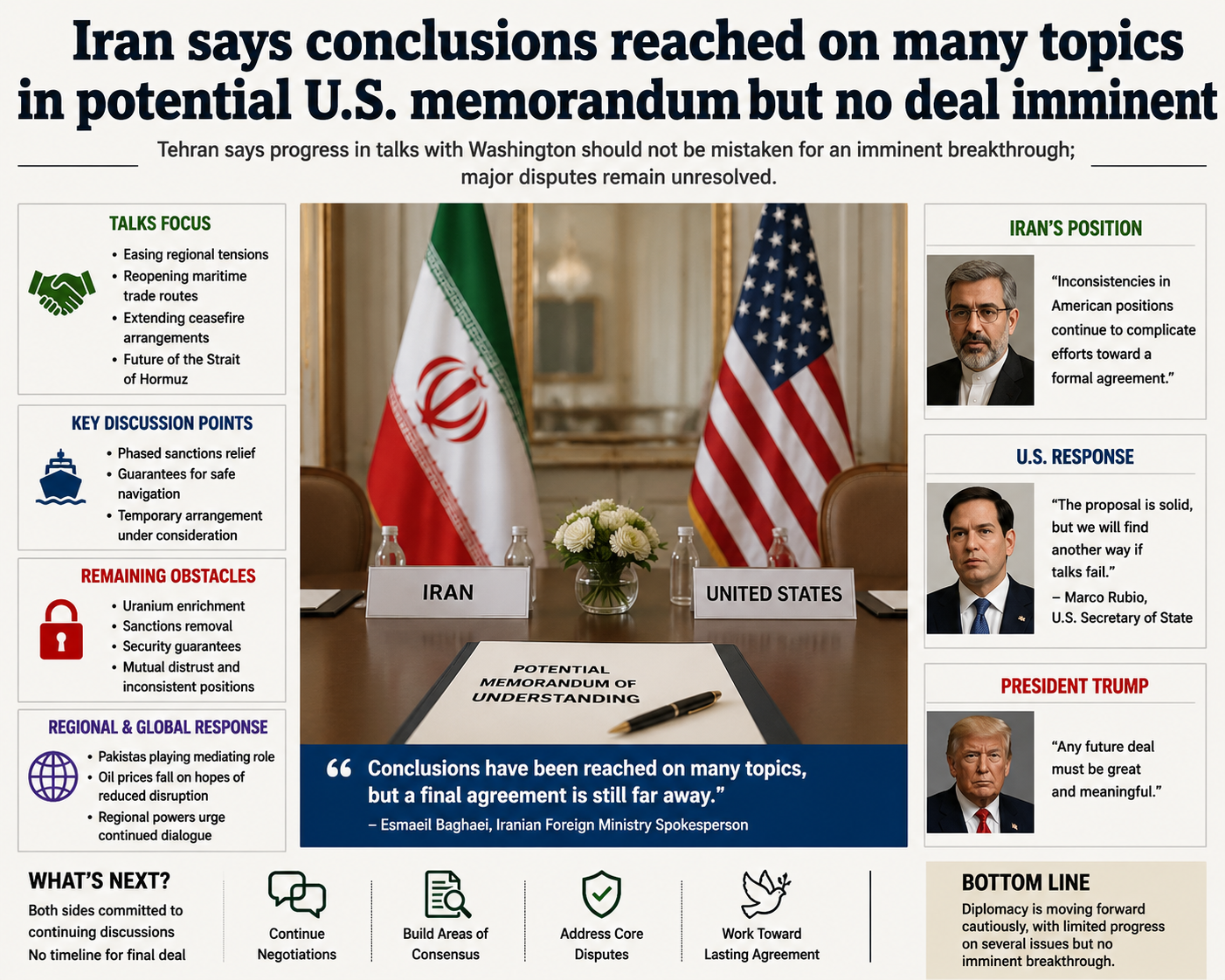
Iran said Monday that negotiators have reached conclusions on “many topics” in discussions over a possible memorandum of understanding with the United States, but officials cautioned that a final agreement is still far away. The remarks come amid ongoing diplomatic efforts to reduce tensions following months of conflict and instability in the Middle East.
The statement was delivered by Iranian Foreign Ministry spokesperson Esmaeil Baghaei, who emphasized that progress in talks should not be mistaken for an imminent breakthrough. According to Iranian officials, negotiators have managed to narrow differences on several issues, yet major disputes remain unresolved.
The negotiations are reportedly focused on a broader framework aimed at easing regional tensions, reopening maritime trade routes, and extending ceasefire arrangements. One major point under discussion is the future of the Strait of Hormuz, a critical global oil shipping route that has faced disruptions during the recent conflict. Talks are also believed to include phased sanctions relief and guarantees for safe commercial navigation.
Despite signs of progress, Tehran has repeatedly accused Washington of sending mixed messages during the negotiations. Baghaei said inconsistencies in American positions continue to complicate efforts toward a formal agreement. Iranian officials have stressed that the current discussions are not centered on nuclear negotiations, though Western officials believe nuclear issues will eventually become unavoidable in any lasting settlement.
On the American side, officials have tried to balance optimism with caution. U.S. Secretary of State Marco Rubio described the current proposal as “solid,” while warning that alternative measures remain possible if diplomacy collapses. Meanwhile, President Donald Trump said any future deal must be “great and meaningful,” signaling that Washington is unwilling to accept a rushed compromise.
Reports suggest the proposed memorandum could involve a temporary arrangement rather than a comprehensive peace treaty. Among the reported ideas are a phased reopening of the Strait of Hormuz, easing certain U.S. restrictions, and future negotiations covering Iran’s nuclear activities and regional influence. However, disagreements over uranium enrichment, sanctions removal, and security guarantees remain significant obstacles.
Regional diplomacy has also expanded beyond Washington and Tehran. Pakistan has reportedly played a mediating role in recent indirect talks, while other regional powers have encouraged continued dialogue to prevent further escalation. Financial markets reacted positively to news of progress, with oil prices falling as traders hoped for reduced disruption in Gulf energy exports.
Analysts say both governments are under pressure domestically. Iranian leaders remain wary of appearing weak after months of confrontation, while U.S. officials face criticism from political opponents who fear any agreement could resemble earlier nuclear arrangements that became deeply controversial in Washington.
For now, both sides appear committed to continuing discussions, but neither is promising a rapid conclusion. The latest comments from Tehran suggest diplomacy is moving forward cautiously, with negotiators seeking limited areas of consensus before attempting to tackle the most difficult disputes.