

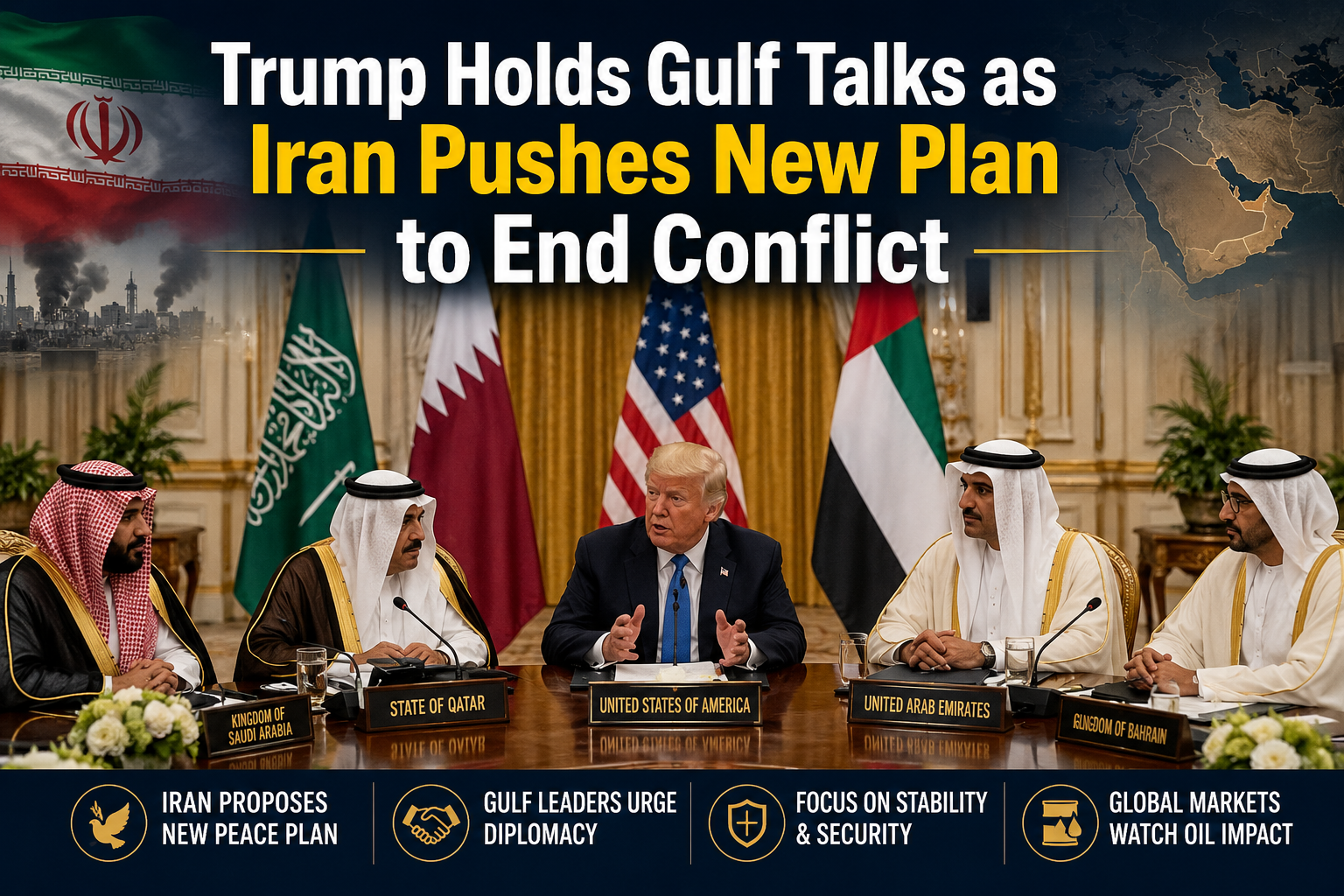
Former U.S. President Donald Trump is meeting Gulf leaders as his administration reviews Iran’s latest proposal aimed at ending the ongoing conflict that has destabilized the Middle East and threatened global energy supplies. Diplomats say the discussions could prove decisive in determining whether fragile negotiations move forward or collapse into renewed military confrontation.
The meetings come amid growing pressure from Gulf states including Saudi Arabia, Qatar, and the United Arab Emirates, all of which have urged Washington and Tehran to avoid another escalation. Regional leaders fear a return to open conflict could severely disrupt oil exports and further inflame tensions across the Gulf.
Recent reports indicate that Iran submitted a revised framework proposal through mediators, including officials from Pakistan and Qatar. The proposal reportedly includes phased steps toward ending hostilities, reopening shipping lanes through the Strait of Hormuz, and restarting broader diplomatic negotiations tied to Iran’s nuclear activities.
Trump said negotiators were getting “closer” to a possible agreement but stressed that any final deal must prevent Iran from obtaining nuclear weapons and address concerns surrounding uranium enrichment. According to multiple reports, Trump plans to consult closely with senior advisers before deciding whether to continue diplomacy or authorize renewed military action.
Behind the scenes, Gulf leaders have intensified efforts to keep negotiations alive. Officials familiar with the talks say several Arab governments privately warned that a new military campaign could destabilize the region for years while damaging global markets already struggling with high energy prices.
Iranian officials, meanwhile, accused the United States of making “excessive demands” during the negotiations but acknowledged that discussions are continuing. Tehran insists sanctions relief and guarantees against future attacks must form part of any settlement.
The conflict has already reshaped regional diplomacy. Since the fighting began earlier this year, tensions around the Strait of Hormuz have repeatedly threatened international shipping routes, sending oil prices sharply higher and alarming governments worldwide. Gulf countries have sought to balance security concerns with economic stability, pushing both Washington and Tehran toward compromise.
Trump’s latest consultations are also politically significant at home. Critics within the United States remain divided between those demanding a tougher military response and others warning against deeper involvement in another Middle East war. Reports suggest Trump has postponed possible strikes several times while giving diplomacy additional opportunities.
Despite cautious optimism from negotiators, major obstacles remain unresolved. U.S. officials continue to demand strict limitations on Iran’s nuclear capabilities, while Tehran maintains that its enrichment program is for peaceful purposes and refuses to surrender what it describes as sovereign rights.
Diplomats say the next 48 hours may determine whether negotiations produce a formal ceasefire framework or whether the region edges back toward wider conflict. Gulf leaders are expected to continue lobbying both sides for restraint as talks enter a critical phase.